
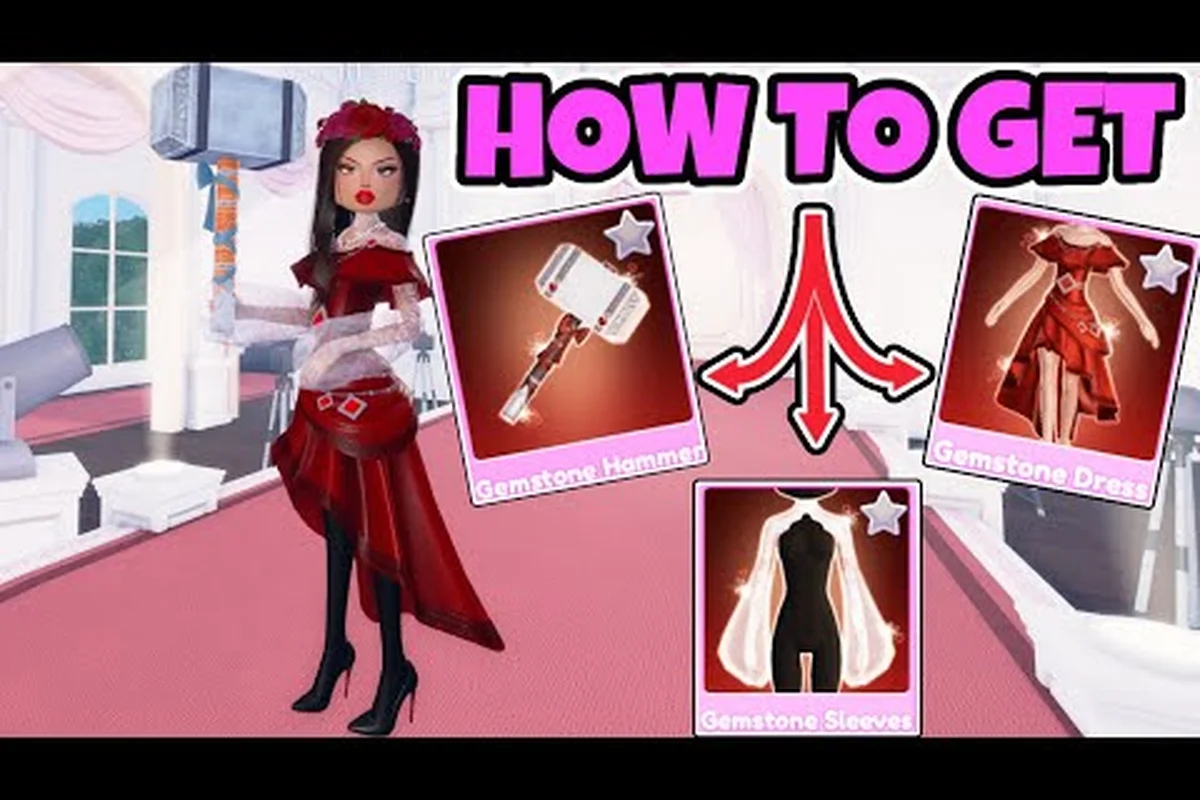
What a Flee the Facility Hammer Set Actually Is
A Flee the Facility hammer set is a hammer + gemstone pairing traded as a single unit at the Trading Post. Because a matching gemstone multiplies a hammer's demand, sets almost always clear for a higher value than a loose hammer, especially when the gem and hammer are both from recent limited-time crates. Players stack sets when they want to push a low-tier item upward in value, or break a set apart when one side is overstocked in the market.
The 9th Anniversary update (09/07/26) added a collector's guide UI window at the Trading Post, which lets you inspect every hammer, gemstone, and crate drop you have unlocked, plus the percentage indicators that show where you sit on a collection. That same update brought the new Facility_0 remake by deadlybones28, fresh circus bundles, and a map-select menu for private servers, all of which are moving set values because the new models ship with crate-locked cosmetics. According to the Flee the Facility change log 09/07/26, the percentage UI is a permanent addition, not an event-only overlay, so set-checking stays fast long after the circus crates close on 09/28/2026.
Sets are not the same as series trades, which bundle multiple hammers (or multiple gemstones) into a single batch. A series is rarer in active circulation because most players trade one-for-one, so a clean series of 3+ matching items usually outpaces a single hammer set in pure value. The line blurs in the Trading Post, where the community calls both "sets," but for the rest of this article, "set" means one hammer plus one matching gemstone.
Hammer Tier Reference for Set Building
Before pairing a gem with a hammer, you need a working sense of where each hammer sits in the rarity stack. The table below pulls from community-reported tiers, cross-checked against the Flee the Facility Fandom Wiki and the r/fleethefacility subreddit. Values shift during events, so treat tier as a stable anchor and demand as the variable that moves.
| Tier | Example Hammers | Set Behavior |
|---|---|---|
| Legendary | Void Crusher, Frostbite, Anniversary Hammer | Demand stays high even without a matching gem; a matching gem pushes the set to the top of the W column |
| Epic | Circuit Smasher, Neon Pulse, Carnival Bell | Sets carry most of the value; loose hammers move slowly |
| Rare | Steel Mallet, Glitched Bat, Plasma Rod | Best gains come from a clean gem pair; demand is volume-driven |
| Uncommon | Wooden Bat, Toy Hammer, Standard Wrench | Sets rarely beat loose trades; consider breaking them apart |
| Common | Default Hammer, Rusty Pipe | Skip the set, sell individually at the Trading Post |
The takeaway: set trades only make sense from Epic upward, with Legendary sets being the most consistent high-value flip in the game right now. For a deeper look at each hammer's demand, the Flee the Facility hammer list breaks down every model currently in the crate pool.
Reading Demand Signals
Demand on the Trading Post moves in three lanes: event hype (anniversary, Halloween, Christmas), reroll streaks (when one hammer drops repeatedly in crates, the community values the rarer models higher), and map nostalgia (the Facility_0 remake pushed older Facility hammers back into rotation). When two of these three lanes stack, a set that was a fair trade last week can swing to a clear W in 48 hours.
Track these signals by saving a screenshot of your trade each week, then comparing. Players who maintain a 30-day log almost always outperform those who wing it, because the data exposes local peaks instead of letting you chase them.
Flee the Facility Gemstone Sets and Pairing Logic
A Flee the Facility gemstone set is the gem-side mirror of a hammer set. Gemstones slot into the gem socket of a hammer, so the most prized pairs share a visual theme (fire + fire, ice + ice, neon + neon) or share a release crate. Mismatched pairs are called "mismatch sets" in community shorthand, and they typically trade below the sum of their parts because the buyer has to find a second matching piece on their own.
| Gemstone Rarity | Pairing Premium | Notes |
|---|---|---|
| Ancient-tier (e.g., Bloodstone, Soulshard) | 2.0x – 3.0x loose value | Almost always traded as a set, never broken |
| Limited event gem (Anniversary, Halloween) | 1.5x – 2.0x | Spike hard during the event window, settle after |
| Crated gem (Carnival Topaz, etc.) | 1.2x – 1.5x | Most stable; volume-driven |
| Common gem (Standard Ruby, Quartz) | ≈1.0x | No premium for pairing; sell loose |
Two practical rules come out of the table. First, never break an Ancient-tier set unless you have a buyer lined up who needs the gem alone; the pairing premium disappears the moment you split it. Second, event gems are the most volatile — they look like a 2x premium on day one of an event and can collapse to 1.1x within two weeks of the event ending, so time your set trades to the hype window.
For traders who want a full list of every gem and its drop source, the Flee the Facility gemstone list catalogs current and legacy gemstones in one place, sorted by crate origin and event window so you can cross-reference whether a piece qualifies as a "mismatch set" candidate before offer-up. It also flags retired gemstones whose hammers no longer drop, which matters because those gems can no longer be re-acquired through gameplay and are the ones most often demanded as the second half of a pair — meaning a loose retired gem you already own can sometimes be flipped into a full set by sniping the matching hammer at loose value.
How to Check Trade Values in Flee the Facility
Step 1: Open the Collector's Guide
The new collector's guide UI at the Trading Post shows every item you own plus a percentage that tells you how close you are to a full set. The percentage is not a market value, but it is the fastest way to spot which side of a trade you should be holding. A trader sitting at 92% on a series is far more motivated to close than one at 14%, so the guide tells you who has leverage.
Step 2: Cross-Check the Community Tier List
The community tier list on r/fleethefacility updates within 24 hours of any new crate drop. Sort the feed by "New" rather than "Hot" so the latest reroll data leads, then screenshot the W/F/L comments for the hammer or gem you are about to trade. W/F/L means Win / Fair / Lose — if the top three comments all say W, the trade is likely in your favor. If they split, treat it as a fair trade and walk unless you genuinely need the other side.
Step 3: Run a Three-Source Check
Before accepting any set trade, verify the value across three independent sources, because a single source can be outdated, manipulated, or misread. For hammer sets specifically, hammer set values fluctuate heavily with event crate rotations and the in-game collector's guide can lag 24–48 hours behind the Trading Post, so checking the r/fleethefacility tier thread for a same-day W/F/L call plus your own screenshot log of last week's clears is what separates a fair gem-for-hammer swap from a 3:1 loss.
| Source | What It Tells You | Speed |
|---|---|---|
| In-game collector's guide | Ownership % and crate origin | Instant |
| r/fleethefacility tier thread | W/F/L community call | 1 – 5 min |
| Trading Post trade log (your own screenshot archive) | What you paid vs. what similar items cleared for last week | 5 – 10 min |
If all three agree, the trade is safe. If two say W and one says L, slow down and ask the trader to wait while you re-check. Pressure to close fast is the single biggest red flag for a scam, and the Trading Post culture treats any "instant accept or I leave" line as an instant decline. The full safety routine lives in the Flee the Facility safe trading guide.
Flee the Facility Trading Rules and Cross-Trading Rules
Trading is governed by the official Flee the Facility game rules, last updated January 4, 2026. The hammer set and gemstone set economy both fall under the same rule set, so understanding the whole picture protects you from accidental bans and from being on the wrong side of a scam.
| Rule | Penalty | Notes |
|---|---|---|
| Exploiting (any form) | Permanent ban (with proof) | Covers dupes, injectors, packet abuse |
| Scamming / visual scamming | Permanent ban | Includes set trades where the gem is hidden behind a hammer preview |
| Cross-trading that leads to a scam involving FTF items | Permanent ban | Robux-for-set, Nitro-for-set, account-for-set all count |
| Stealing assets | Permanent ban | Covering another player's trade window or stealing their offer |
| Selling or buying items for Robux | 6-month ban | Includes any real-money conversion |
| Lag switching | 1-month ban | Tying up the game to break a trade |
| Duping items | Permanent ban | Creating multiple copies of a hammer or gem |
| Ban evading | Original ban increases, alt banned | The new alt is treated as the offender |
What Cross-Trading Means Here
Cross-trading is a trade that bridges Flee the Facility with another game, currency, or platform. The most common version is "FTF set for Robux", where one player promises a Robux payment in exchange for a hammer set or gemstone set. Per the official rules, any cross-trade that ends in a scam involving FTF items is a permanent ban for both parties, even if only one side cheated. The rule exists because the moderation team has no way to recover the lost set, so they treat the entire transaction as bannable.
Safer alternatives keep every hammer set, gemstone set, and other FTF inventory item inside the official Roblox economy, where moderators can reverse a bad deal and scammers have no leverage. Because cross-trades with Robux, Discord Nitro, or real money fall outside any rollback path, both sides get hit with a permanent ban the moment a dispute is filed — so staying in-game is the only option that protects a high-value hammer set like a Brickbattle Brawl or Crowd Control roll from being lost forever.
-
Trade sets for other FTF items at the Trading Post with a third-party witness.
-
Use the in-game value list to anchor your asks.
-
Walk away from any deal that mentions Robux, Nitro, Discord Nitro boosts, account swaps, or real money.
Sticking to in-game trades at the Trading Post almost never triggers a ban wave because the moderator team can audit the trade log, reverse a bad swap, and confirm both parties walked away with the items they originally deposited — something that is technically impossible once the deal moves to Robux, Discord Nitro, or a real-money PayPal transfer. For high-value hammer sets like Brickbattle Brawl or Crowd Control plus gemstone sets, this rollback path is the only reason a scammed player can recover the loss instead of watching a permanent ban land on both accounts.
Flee the Facility Scamming Rules and How Set Trades Get Exploited
The scamming rule is the most relevant section for hammer set and gemstone set traders. Scamming includes visual scamming, which is when a player uses UI tricks to make one item look like another during the trade window. The most common visual scams on set trades are:
-
Hidden gem: trading a hammer with the gem socket covered by a UI element, so the buyer thinks the gem is part of the hammer skin.
-
Fake preview: opening the hammer's model on a different hammer so the buyer sees the wrong model during the trade window.
-
Lag-switch cover: forcing a disconnect mid-trade after accepting, so the trade does not finalize but the seller's inventory is locked for a window.
-
Borrow-and-keep: asking to "try" a set in a private server and then refusing to return it, which counts as stealing rather than scamming but is punished the same way.
Defensive Habits
A solid defensive routine is what separates hammer set traders who close a fair deal from those who lose a Mythic gemstone to a quick-switch scam. Treat every trade as a four-step ritual: open the Trading Post server, snapshot the full window including the chat log, hover-verify each gem's true color rather than trusting the thumbnail preview, and refuse any partner who types "trade fast" or tries to lock the window before you've counted both sides. Skipping even one of these habits — for example, accepting a "small" 3-item trade to "save time" — is how most cross-trading disputes start, since the same players who rush a small swap will usually attempt a much larger hammer-for-gemset bait afterward.
-
Open the Trading Post, not a private server, for any trade over 5 items.
-
Screenshot before and after the trade, including the chat log.
-
Verify the gem color by hovering with the mouse, never by squinting at a thumbnail.
-
Decline any trade where the other player rushes you. The community has a saying: "fast trader, lost hammer."
For traders who want a deeper rundown of scam patterns and how to report them, the Flee the Facility safe trading guide is built around the same rule set and walks through real ban cases reported by players.
How to Get Good Trades on Flee the Facility
Trade What the Other Side Actually Needs
The best trades are not W's on paper; they are W's where both sides walk away upgrading a weak spot. A player sitting at 92% on the Anniversary series will pay a premium for the last piece, and a player sitting at 92% on a different series will trade their 8% filler for your 100% complete set. Win-win trades close in seconds and rarely get contested.
Stack Event Timing
The 9th Anniversary event ends 09/28/2026, and every Anniversary hammer, gemstone, and crate will start losing demand the moment the circus decorations come down. If you are sitting on Anniversary items, the next 19 days are your window to push them at peak value. After 09/28, the same sets will trade at 60 – 70% of the current value, based on the post-event crash from the 8th Anniversary set.
| Timing | Effect on Set Value |
|---|---|
| Event live | 1.4x – 1.8x premium on event-locked sets |
| Event last 3 days | Spike as FOMO traders close out |
| Event +1 to +7 days | Crash to 1.0x – 1.1x |
| Event +30 days | Stabilize at 0.9x – 1.0x baseline |
Use the Trading Post, Not Discord
Most Flee the Facility Discord servers are third-party, and trades there are cross-trades under the official rules. The Trading Post stays inside the in-game economy, so any dispute can be escalated to the moderator team. The community subreddit threads for "value check" are useful for getting a third-party opinion before you walk into the Trading Post, but the actual exchange should happen in-game.
Negotiate in Round Numbers
Traders who anchor on round numbers (3 items for 3 items, 1 set for 1 set) close faster and more often than traders who chase a fractional edge. A 2-for-3 trade that both sides call fair is worth more than a 1-for-1 trade that one side feels was a loss, because trust compounds over time and unlocks future overpays.
Avoid the "Up-Trade Trap"
An up-trade is when a trader offers a high-tier item in exchange for multiple lower-tier items, banking on the visual gap to push you into accepting. The pattern looks generous, but it usually hides a mismatch gem or a legacy model that the market no longer values. Run the three-source check on every up-trade, no matter how shiny the offer looks. For a full breakdown of how to anchor on hammer values, the Flee the Facility trading guide walks through the same workflow with current crate examples.
Frequently Asked Questions
What is a Flee the Facility hammer set?
A Flee the Facility hammer set is a hammer paired with a matching gemstone that trades as a single unit at the Trading Post. Sets usually clear for more than a loose hammer because the buyer gets a fully socketed weapon, and the matching gem is the hardest part to source on its own. Sets only make economic sense from Epic tier upward.
How do I check the value of a hammer set before trading?
Open the new collector's guide UI at the Trading Post to confirm your ownership percentage, then cross-check the W/F/L thread on r/fleethefacility, and finally compare against your own trade log screenshots. If all three sources agree the trade is W, accept; if they split, walk. The three-source check takes under ten minutes and is the fastest way to avoid a Flee the Facility trading mistake.
Are Robux-for-set trades allowed under the rules?
No. The official Flee the Facility game rules list cross-trading for Robux, real money, accounts, or Discord Nitro as a 6-month ban for the buyer, and a permanent ban if the cross-trade ends in a scam involving FTF items. Stick to in-game set-for-set trades at the Trading Post to stay safe.
What counts as visual scamming in a set trade?
Visual scamming is any UI trick that makes one item look like another during the trade window, such as covering a gem socket, swapping a hammer preview, or hiding a model behind an interface element. The official rules punish visual scamming with a permanent ban, so always hover over every item in the trade window before accepting.
How long do anniversary sets stay valuable after the event?
Anniversary hammer sets and gemstone sets typically hold a 1.4x – 1.8x premium while the event is live, spike in the last three days on FOMO closes, then crash to 1.0x – 1.1x within a week of the event ending. Based on the 8th Anniversary post-event curve, expect anniversary sets to stabilize around 0.9x baseline by day 30 after the circus crates close on 09/28/2026.